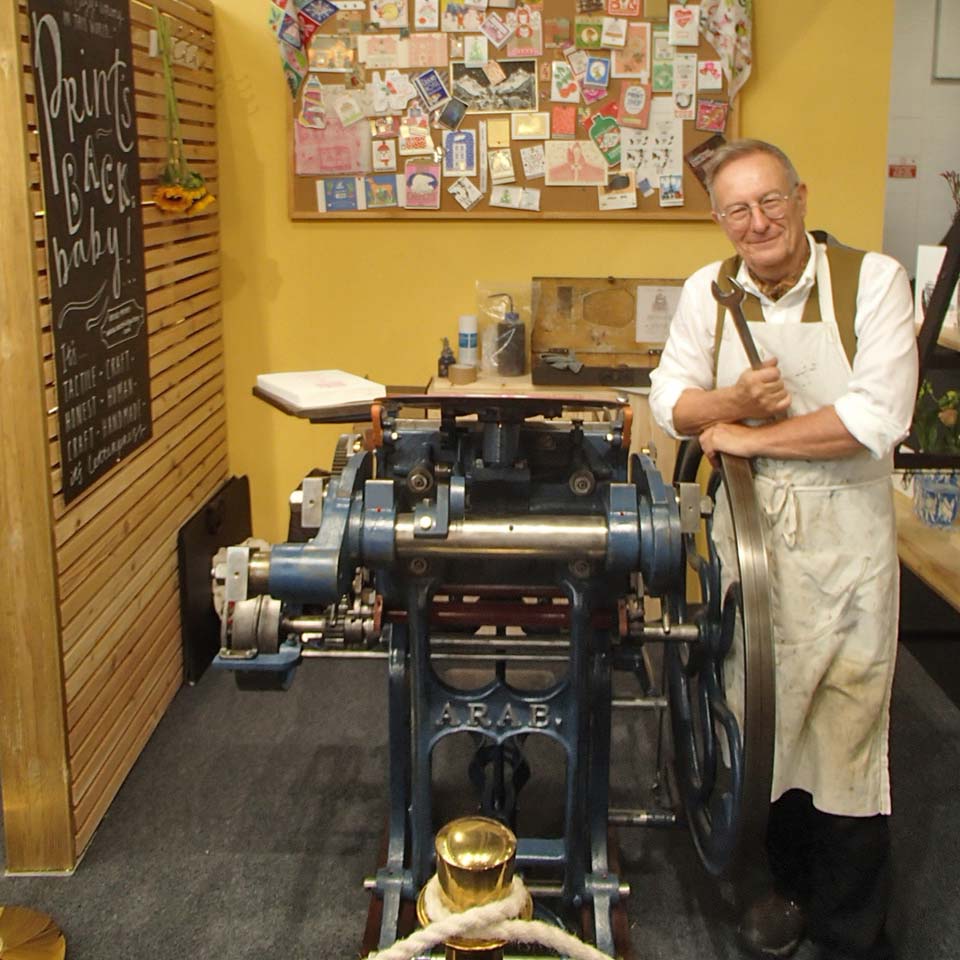
Since selling the letterpress printing business in 2020, I have kept in touch with the new owners, Archivist Gallery, and this year they asked me to provide a machine on which to demonstrate letterpress printing at Top Drawer, held at Olympia from Sunday 13th to Tuesday 15th September 2026.
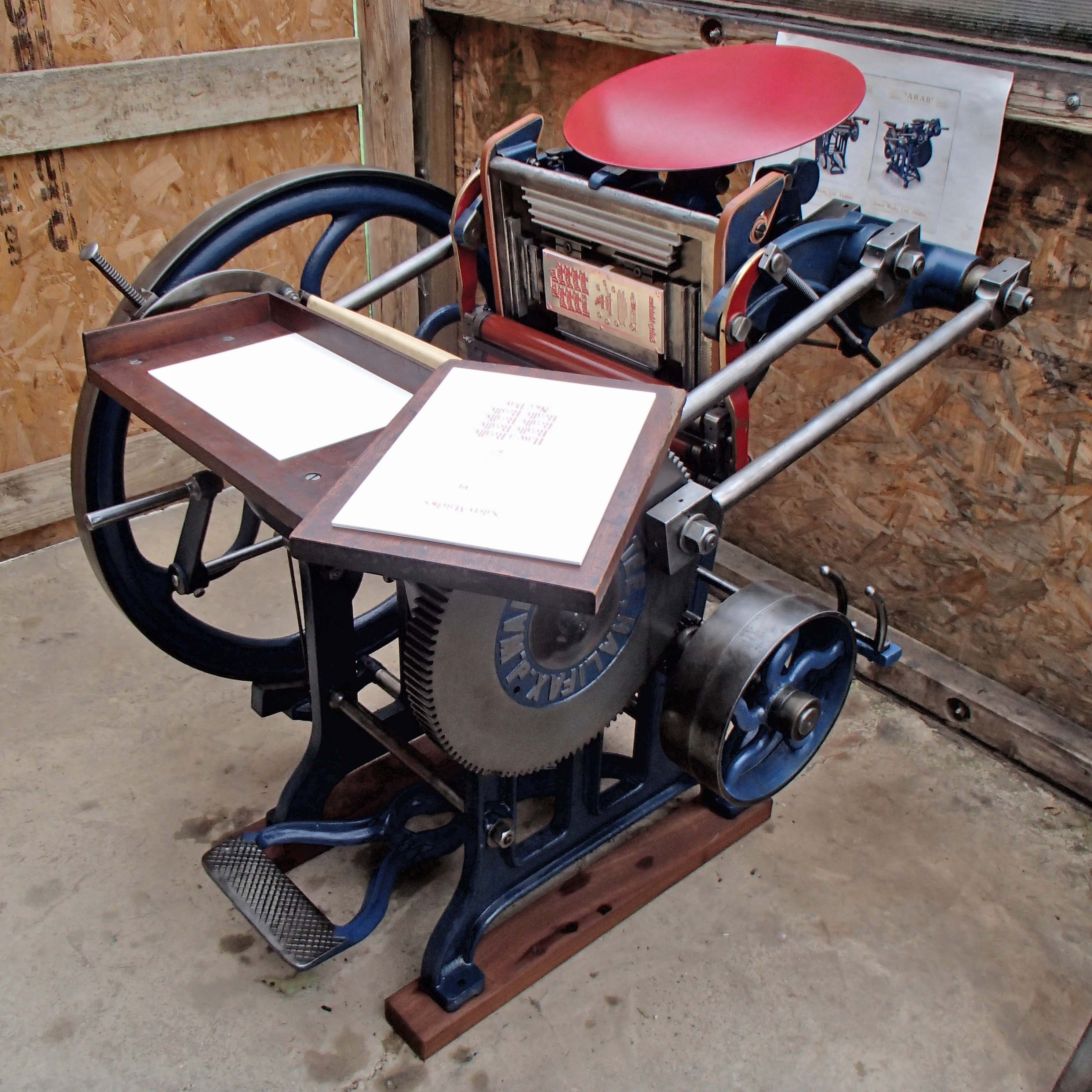
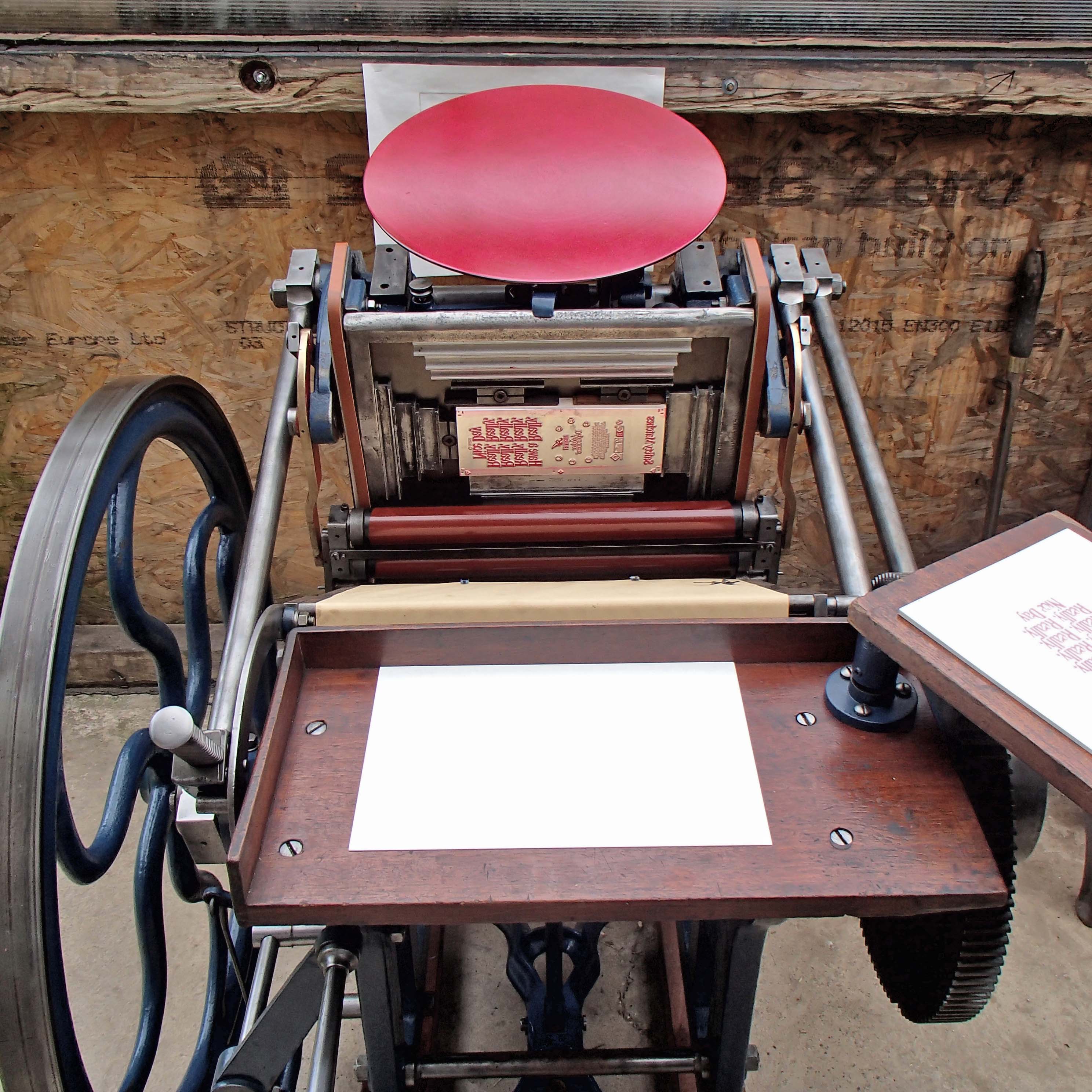
I was delighted to oblige, particularly as it gave me an excuse to restore to perfect working order an Arab Crown Folio treadle-operated, hand-fed jobbing platen. The one I chose was a magnificent blue example, serial number 4121, manufactured in 1899 at Crown Works, Hopwood Lane, Halifax, by its inventor, maker and patentee, Josiah Wade (1842–1908).
The Arab was rightly described as the star of the show. It was complete with its steam gear, in the form of “fast and loose wheels”, although getting the press to Olympia presented something of a challenge: it weighs about three-quarters of a tonne. Fortunately, the Arab is so well designed and made that I was able to dismantle it into about 100 pieces, wheel them on a trolley to Archivist’s stand, G40, and then put the press back together again.
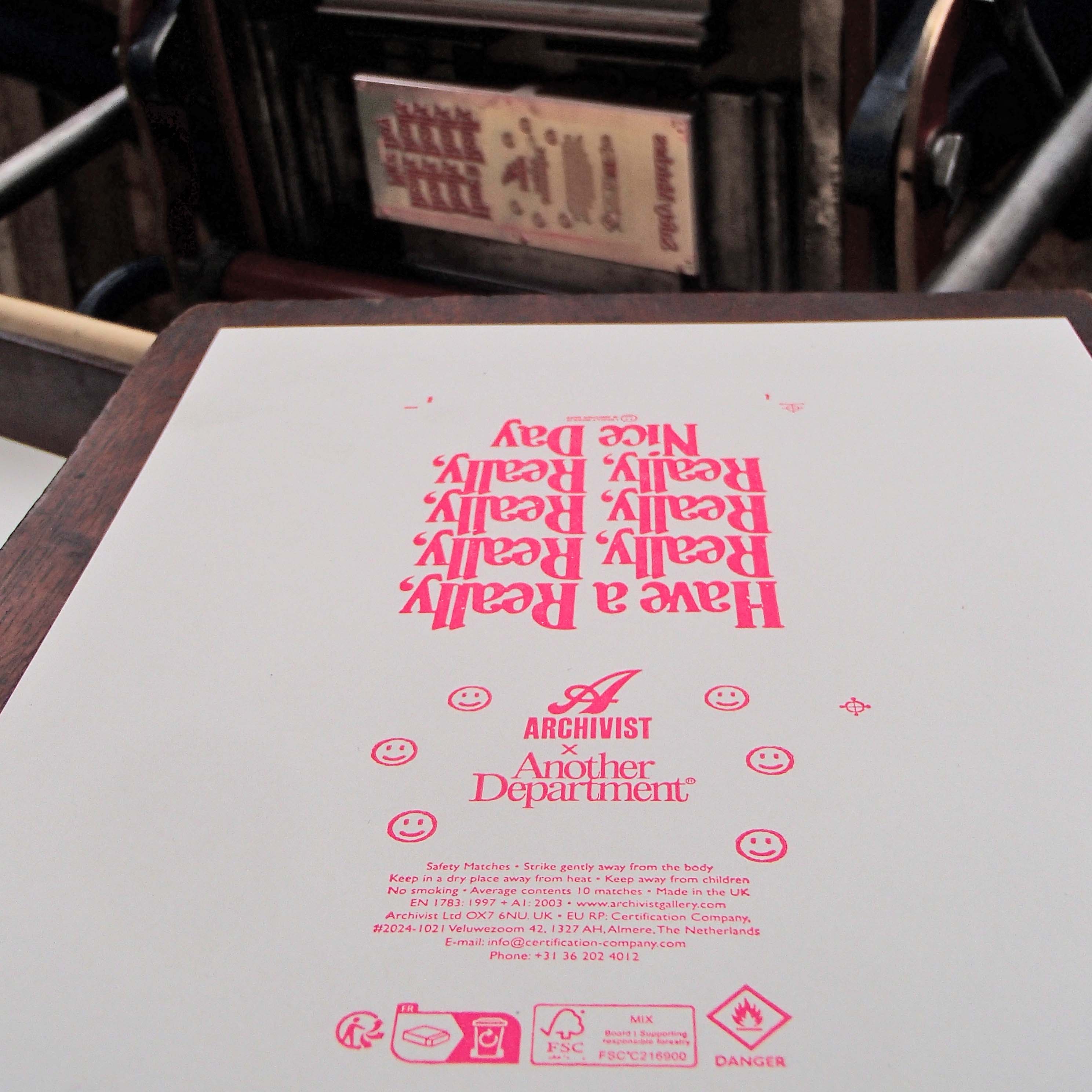
The three days were something of a blur, with a great many people interested both in letterpress printing and in the Arab itself. On it I printed copies of an Archivist matchbook in fluorescent pink ink, which provided an excellent demonstration of one of the advantages letterpress has over digital printing.
Printing digitally on 500gsm thick, soft card requires specialist equipment and the colours are normally produced from the four process colours — cyan, magenta, yellow and black (CMYK). Letterpress is quite different. The chosen ink can be virtually any colour, including fluorescent and metallic colours, and the image is physically pressed into the thick board, leaving a three-dimensional impression which can both be seen and felt.
It is this combination of colour, impression and texture which makes letterpress particularly suited to top-quality stationery, greetings cards, matchboxes, wedding stationery and other work where the printing itself is intended to be part of the object rather than merely an image upon it.
As five o’clock approached on the final day, I cleaned the fluorescent pink ink from the rollers and ink disc, cleaned the pallet knife, and began taking the Arab apart again. I have now got this operation down to about an hour and, while everyone else on the stand returned to the hotel, the press gradually became another hundred or so manageable pieces.
My allotted time to bring the van into the loading area was not until 8.30pm, so I too went back to the hotel and made myself a hot chocolate before returning to Olympia. Several journeys with the trolley later, all three-quarters of a tonne of Arab was safely back in the van and I headed for the hotel for the last time, thoroughly tired but in that rather agreeable state of relieved exhaustion which follows a successful trade show.
Early the following morning I fortified myself with a full English breakfast at the hotel — £22, which I thought deserved recording — and then went to meet Giles at Central Saint Martins art college.
We had a Heidelberg platen to move: and they weigh a tonne-and-a-half and do not come apart.
Written by Patrick Roe.